
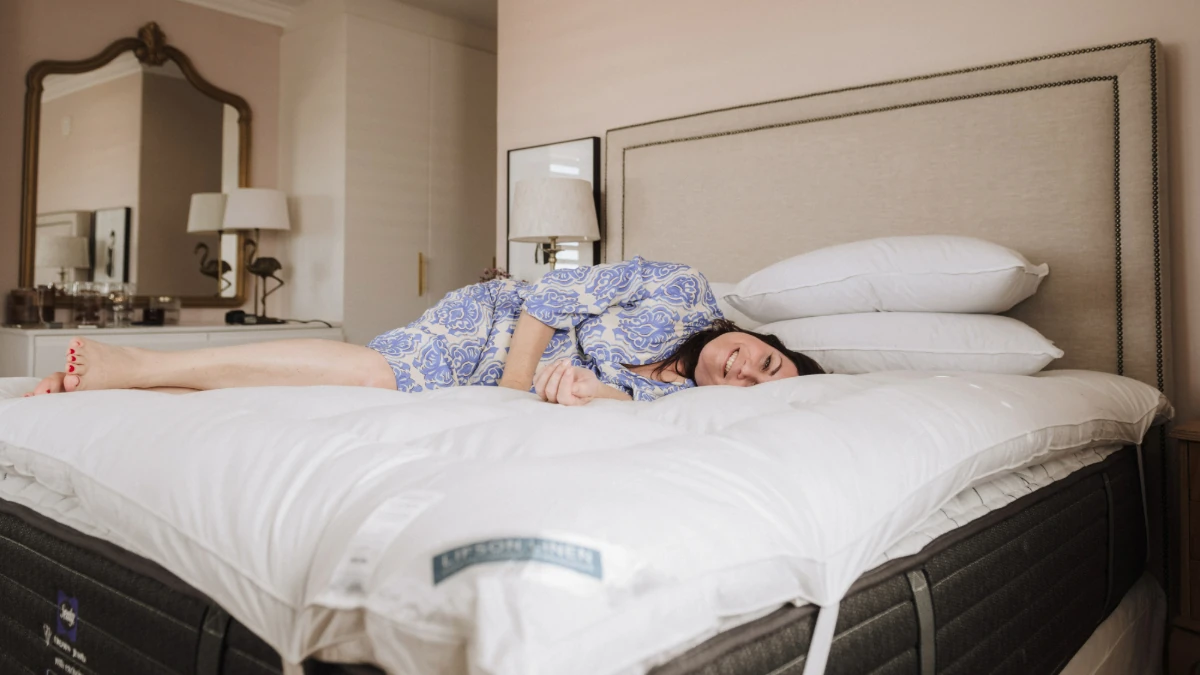
In our Go-Go-Go world of same-day deadlines and maximised productivity, the idea of sleeping in the middle of the day can seem… Rebellious? Wrong? Like a recipe for getting fired in a hurry?
I get it. While “power-napping” has long been the secret weapon of world leaders and well-rested high performers, it still feels weird to talk about it. But while most adults treat them like a guilty pleasure, power naps are a legitimate wellbeing strategy – and a 20-minute mid-day snooze is one of the simplest, cheapest, most underrated tools for boosting your energy, mood, and cognitive performance.
But you have to do it right. So let’s start with the argument in favour of power napping, before highlighting some of the drawbacks.
The science is very clear: a short, intentional daytime nap can sharpen your mind, stabilise your mood, and improve your performance far more effectively than trying to push through the fatigue.
And the research backs this up. In 1995, NASA, through the Ames Research Centre, conducted a study on “controlled rest” (their term for “napping”). They investigated the effects of a 40-minute planned nap opportunity for pilots on long-haul flights and found that pilots who took a nap (which averaged 26 minutes) showed a 34% improvement in performance and a 54% improvement in physiological alertness compared to those who did not nap.
The thing is, trying to work when you’re fatigued doesn’t just make you slow – it makes you irritable, impatient and, honestly, not that great at your job. A short nap reduces emotional reactivity, improves patience, and helps to regulate your stress hormones. To put it simply, a midday reset can be the difference between coping and crashing.
During World War II, Winston Churchill famously made his afternoon nap a non‑negotiable, claiming that a midday sleep allowed him to “get twice as much done”. (He kept a bed in the Houses of Parliament, which is great if you’re the Prime Minister but maybe not so practical if you’re working for a boss.)
As I said earlier, though, you have to do it right. The optimal nap time is 10 to 25 minutes, which is long enough to refresh your brain but not long enough for you to enter deep sleep. If you “nap” for longer than half an hour, you’re likely to wake up feeling groggier – and crankier – than before. Set an alarm to avoid losing an entire afternoon.
The artist Salvador Dalí is said to have perfected the “Key Technique”, where he’d hold a key in his hand as he lay down for his mid-day siesta. The idea was that, just as he fell into deep sleep he would drop the key, and the Clang! on the floor would wake him up.
I’ve also heard about people drinking a small cup of coffee right before lying down. Caffeine takes about 20 minutes to kick in, so the thinking is that you’ll wake up doubly alert.
In terms of timing, the ideal window is between 1pm and 3pm, when your circadian rhythm naturally dips. Napping too late in the afternoon can interfere with your night‑time sleep.
Also, if you struggle with insomnia or have difficulty falling asleep, short daytime naps could interfere with your sleep drive. In these cases, it’s better to focus on improving your night‑time sleep quality. Chat to your GP about your options.
And finally, of course, there’s the practicality of it. If you work from home and can book out a 30-minute meeting with yourself and your Good Down duvet, a mid-day nap is probably a feasible option. If you work in an office and are caught snoozing at your desk, it may be seen as unprofessional and career-limiting. Be smart.
I’m a big believer in naps, but I’m also running a small business – so I know that in some circumstances it’s impractical or impossible. In those cases, a Saturday or Sunday afternoon may be your best bet.
Just remember to set an alarm.
